

What is the coefficient of friction of 32650 nickel strip?
Oct 10, 2025
Hey there! As a supplier of 32650 nickel strips, I often get asked about the coefficient of friction of these strips. So, I thought I'd take a deep dive into this topic and share some insights with you all.
First off, let's understand what the coefficient of friction is. In simple terms, it's a measure of how much two surfaces resist sliding against each other. When we talk about the coefficient of friction of 32650 nickel strips, we're looking at how they interact with other materials they come in contact with.
The coefficient of friction can be broken down into two types: static and kinetic. The static coefficient of friction is the force needed to start an object moving from rest, while the kinetic coefficient of friction is the force required to keep the object moving at a constant speed.
For 32650 nickel strips, the coefficient of friction can vary depending on a few factors. One of the main factors is the surface finish of the strip. A smooth surface will generally have a lower coefficient of friction compared to a rough surface. This is because there are fewer irregularities on a smooth surface, so there's less resistance when another object slides over it.
Another factor that can affect the coefficient of friction is the material the nickel strip is in contact with. Different materials have different surface properties, which can either increase or decrease the friction between the two surfaces. For example, if the 32650 nickel strip is in contact with a soft rubber material, the coefficient of friction might be higher compared to when it's in contact with a hard plastic material.
The environment also plays a role in determining the coefficient of friction. Factors like temperature, humidity, and the presence of contaminants can all have an impact. For instance, in a high - humidity environment, a thin layer of moisture can form on the surface of the nickel strip, which can reduce the friction. On the other hand, if there are contaminants like dust or grease on the surface, they can increase the friction.
Now, let's talk about why the coefficient of friction of 32650 nickel strips matters. In many applications, the right amount of friction is crucial. For example, in battery manufacturing, 32650 nickel strips are often used to connect battery cells. If the coefficient of friction is too low, the connections might not be secure enough, which could lead to poor electrical conductivity and potential safety issues. On the other hand, if the friction is too high, it might make the assembly process more difficult and time - consuming.
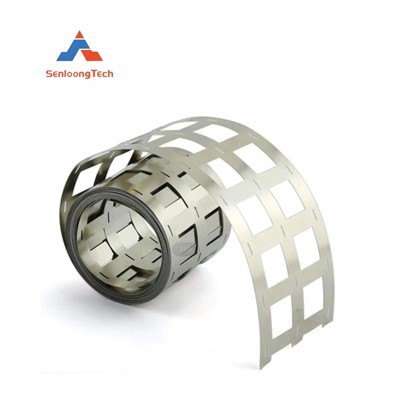

If you're in the market for high - quality 32650 nickel strips, we've got you covered. We offer a range of products, including Pure Nickel Strip 32650, 32650 Lithium Battery Nickel Strip, and 2P Pure Nickel Strip For 32650 Battery. Our strips are carefully manufactured to ensure consistent quality and the right surface finish to meet your specific friction requirements.
We understand that every customer has unique needs, and we're more than happy to work with you to find the perfect 32650 nickel strip solution. Whether you need a strip with a high or low coefficient of friction, we can customize our products to suit your application.
If you're interested in learning more about our 32650 nickel strips or want to discuss your specific requirements, don't hesitate to reach out. We're here to help you make the right choice for your project.
When it comes to measuring the coefficient of friction of 32650 nickel strips, there are several methods available. One common method is the inclined plane method. In this method, a sample of the nickel strip is placed on an inclined plane, and another object is placed on top of it. The angle of the inclined plane is gradually increased until the object starts to slide. The tangent of this angle gives the static coefficient of friction.
Another method is the use of a tribometer. A tribometer is a device that can measure the friction force between two surfaces under controlled conditions. It can provide more accurate and detailed information about the coefficient of friction, including how it changes with different loads and sliding speeds.
In the manufacturing process of our 32650 nickel strips, we pay close attention to the factors that affect the coefficient of friction. We use advanced manufacturing techniques to control the surface finish of the strips. For example, we can use processes like rolling and polishing to achieve a smooth and consistent surface.
We also conduct thorough quality control checks to ensure that the coefficient of friction of our strips meets the required standards. Our quality control team uses state - of - the - art equipment to measure the friction properties of the strips at different stages of the manufacturing process.
In addition to the technical aspects, we also focus on providing excellent customer service. We know that choosing the right nickel strip can be a complex decision, and we're here to guide you through the process. Our team of experts can answer all your questions about the coefficient of friction and other properties of our 32650 nickel strips.
If you're involved in battery production, electronics manufacturing, or any other industry that uses 32650 nickel strips, we invite you to contact us. We can provide you with samples of our products so that you can test them in your own applications and see for yourself the quality and performance of our strips.
We're committed to building long - term relationships with our customers. By providing high - quality products and outstanding service, we aim to be your go - to supplier for all your 32650 nickel strip needs. So, if you're looking for a reliable supplier who understands the importance of the coefficient of friction and other critical properties, look no further.
In conclusion, the coefficient of friction of 32650 nickel strips is an important property that can have a significant impact on their performance in various applications. By understanding the factors that affect it and working with a trusted supplier, you can ensure that you get the right nickel strips for your project. If you have any questions or want to start a conversation about your 32650 nickel strip requirements, just get in touch. We're ready to assist you.
References
- "Tribology: Friction, Wear, and Lubrication" by Bhushan, Bharat
- "Engineering Tribology" by Stachowiak, Gwidon W. and Batchelor, Andrew W.